November 17, 2022
Arbëreshë Voices Across the Ocean
Thursday, November 17 at 6 PM.
58 Park Avenue, New York City.
Featuring ethnomusicologist and performer Nicola Scaldaferri.
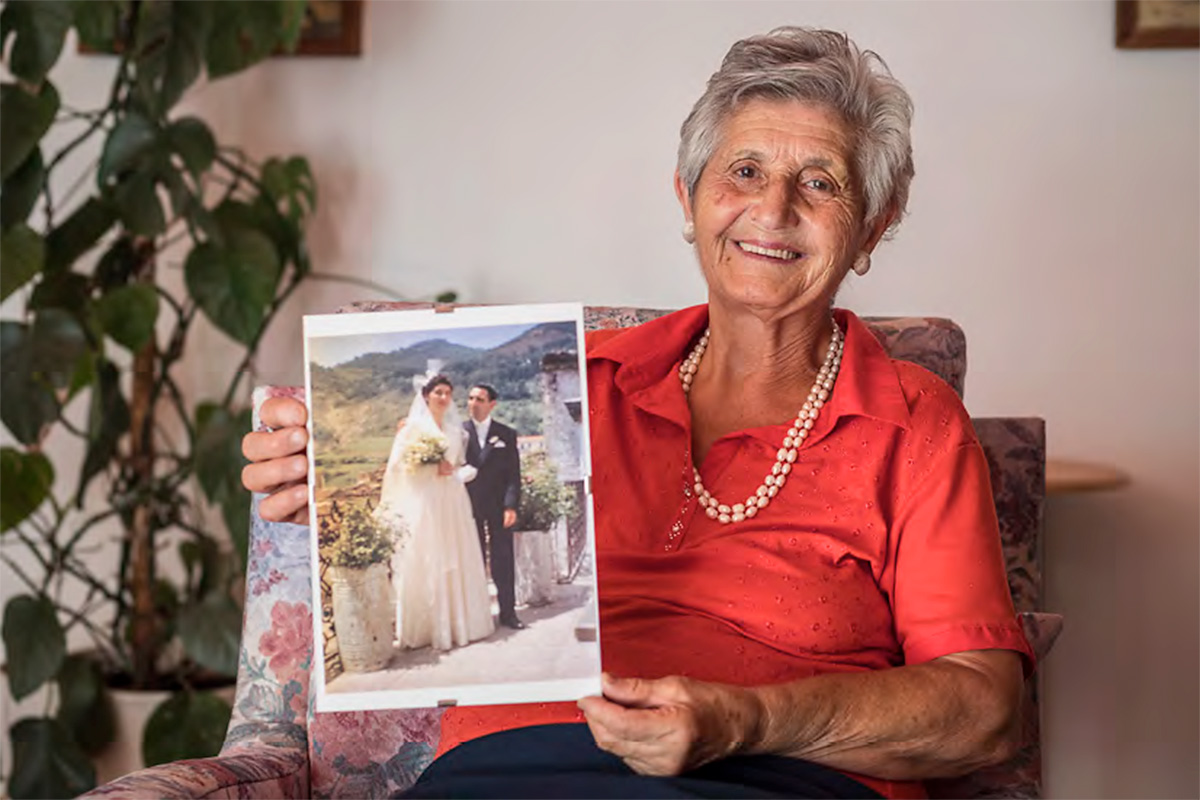
Giuseppe “Joe” Chiaffitella (1900–1980), known as Peppino in Italy, emigrated from the Arbëreshë village of San Costantino Albanese to New York in the early twentieth century. During this period, New York and New Jersey became major destinations for Arbëreshë immigrants from southern Italy. Entire blocks in Jersey City and Brooklyn were home to closely connected Arbëreshë communities, who referred to their neighborhoods as katund, “village”, preserving language, traditions, and kinship ties across the Atlantic.
The Arbëreshë are descendants of Albanian refugees who settled in southern Italy in the fifteenth and sixteenth centuries, creating a unique cultural identity shaped by both Albanian and Italian heritage. Chiaffitella and many of his friends in New York came from this centuries-old diaspora community.
Determined to maintain ties between his hometown and relatives in America, Peppino traveled frequently along the New York–Naples route, carrying with him photographs, messages, and audio recordings exchanged between families and friends. At a time when transatlantic phone calls were inaccessible for most people, these recordings became deeply personal “sound souvenirs,” preserving voices, emotions, and connections across oceans.
Drawing from research presented in Sonic Ethnography, Professor Scaldaferri will share and discuss selections from these rare original recordings, offering a powerful journey through migration, memory, and the musical legacy of the Arbëreshë community.
One surviving tape bears the handwritten label:
“The voice of the relatives and friends of San Costantino Albanese — to their loved ones in America, year 1958.”
In one touching recording, a young relative says:
“Just as my voice will come to America, I wish I could come there too.”
These recordings reveal how sound and memory helped sustain community, belonging, and identity within the Arbëreshë diaspora. Today, Chiaffitella is still remembered in his village as “Uncle Peppino from America.”
Albanian Epic Songs and Oral Tradition in Kosova
Isa Elezi-Lekgjekaj is today widely recognized as the greatest living epic singer and performer of Rugova, Kosova. His repertoire includes legendary epics about the deeds of the brothers Muji and Halil, which covers several thousands of formulaic verses. The singing is based on a few rhythmic and melodic patterns, continuously supported by the instrument which revolves around a small range of pitches.
The importance of legendary epic songs in the border areas between Montenegro, Albania, and Kosova, was highlighted by the fundamental research of Milman Parry and Albert Lord in the 1930s. We want people to understand how their story is imperative to our nation’s musical history and give more weight to the contribution of Albanian cultural heritage. The epic singers from the dawn of human consciousness have been a deeply significant group and have contributed abundantly to the spiritual and intellectual growth of man. — Albert B. Lord
Professor Nicola Scaldaferri
Born in the Arbëreshe community of S. Costantino Albanese, he is Professor of Ethnomusicology and Anthropology of Music at the University of Milan, and director of the Laboratory of Ethnomusicology and Visual Anthropology, LEAV. Prof. Scaldaferri completed his studies at the Conservatory of Parma, and at the University of Bologna (PhD in Musicology), spending periods abroad as a student and researcher (Erasmus student in Paris; Visiting Fellow and Fulbright Fellow at Harvard University). He has completed fieldworks in Italy, Albania, Ghana, and Burkina Faso.
Event Photos